The ZudoTrad
The grid you know, sized for everyone.
One face, the classic rules — but built by the ZudoCube engine, which means it comes in five sizes from a 4×4 a five-year-old can finish to a 16×16 that needs the alphabet. Printed beautifully, playable in the browser, and always one QR scan away from its digital twin.
How it works
Serious tools, tiny grids.
Traditional grids are how new solvers — especially young ones — earn the rules before the shared edges of flats and cubes. Same engine, same care, one face.
01
One grid, the classic rules
Rows, columns, and boxes each use every number once. No shared edges, no surprises — the purest form of the puzzle.
02
Sized to the solver
A 4×4 with 2×2 boxes is a real logic puzzle a young kid can finish alone. The 6×6 teaches rectangular boxes. The 9×9 is the newspaper classic.
03
Letters past nine
On 12×12 and 16×16 grids the digits run out, so A through G join in — the same single-glyph logic, stretched to an evening.
04
The same engine underneath
Every traditional board is generated and graded by the ZudoCube solver — a guaranteed unique solution, honest difficulty, and hints that teach instead of tell.
Want it taught move by move? ZudoCube University walks you through interactive lessons on a real board — this page is the grown-up tour, University is the classroom.
Pick your size
One idea, every appetite.
Five sizes, one ladder — start a kid on the 4×4 on Saturday morning and hand them the 16×16 a few birthdays later.
Young kids
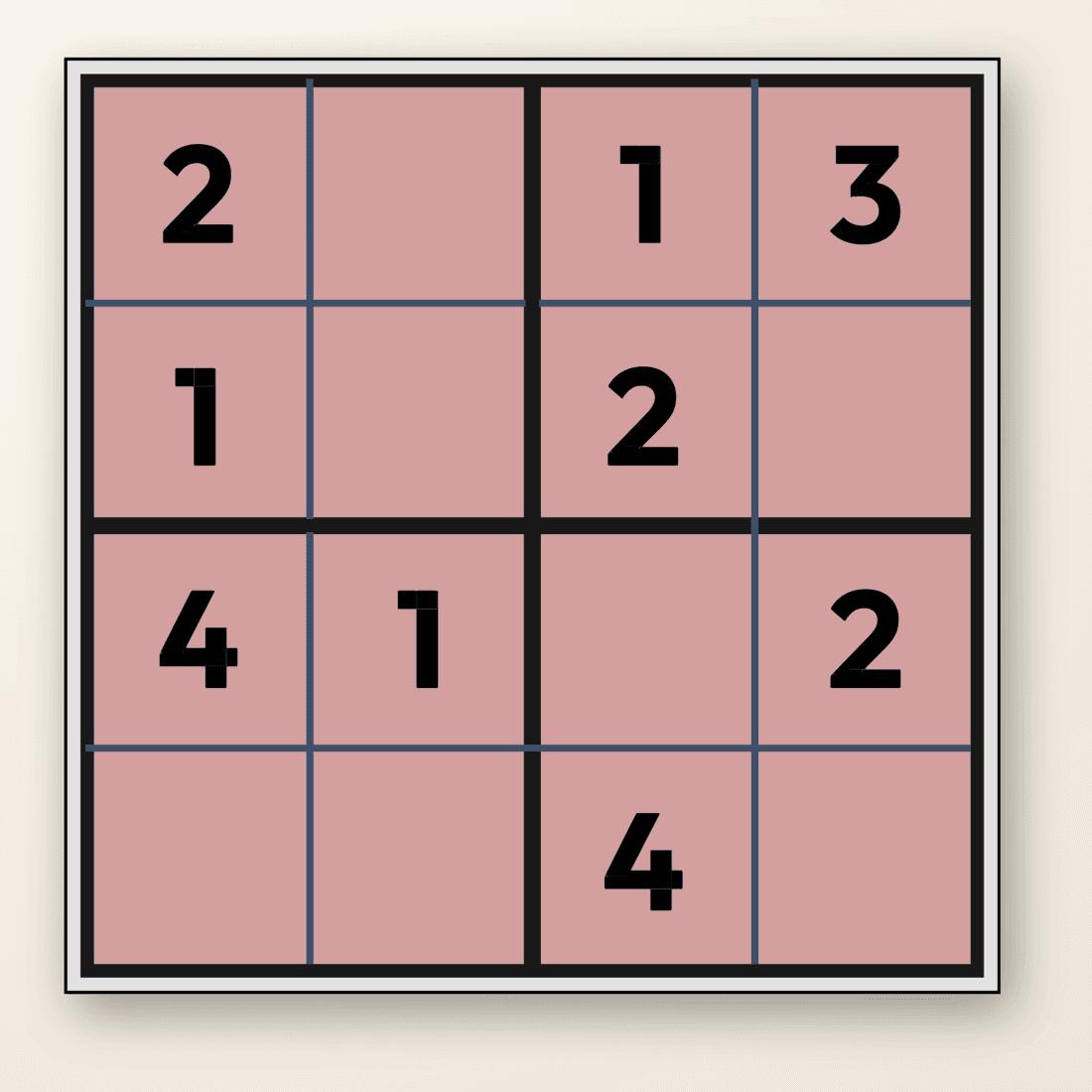
4×4
16 cells · 2×2 boxes
Four numbers, four boxes — a first logic victory for young kids, no reading required.
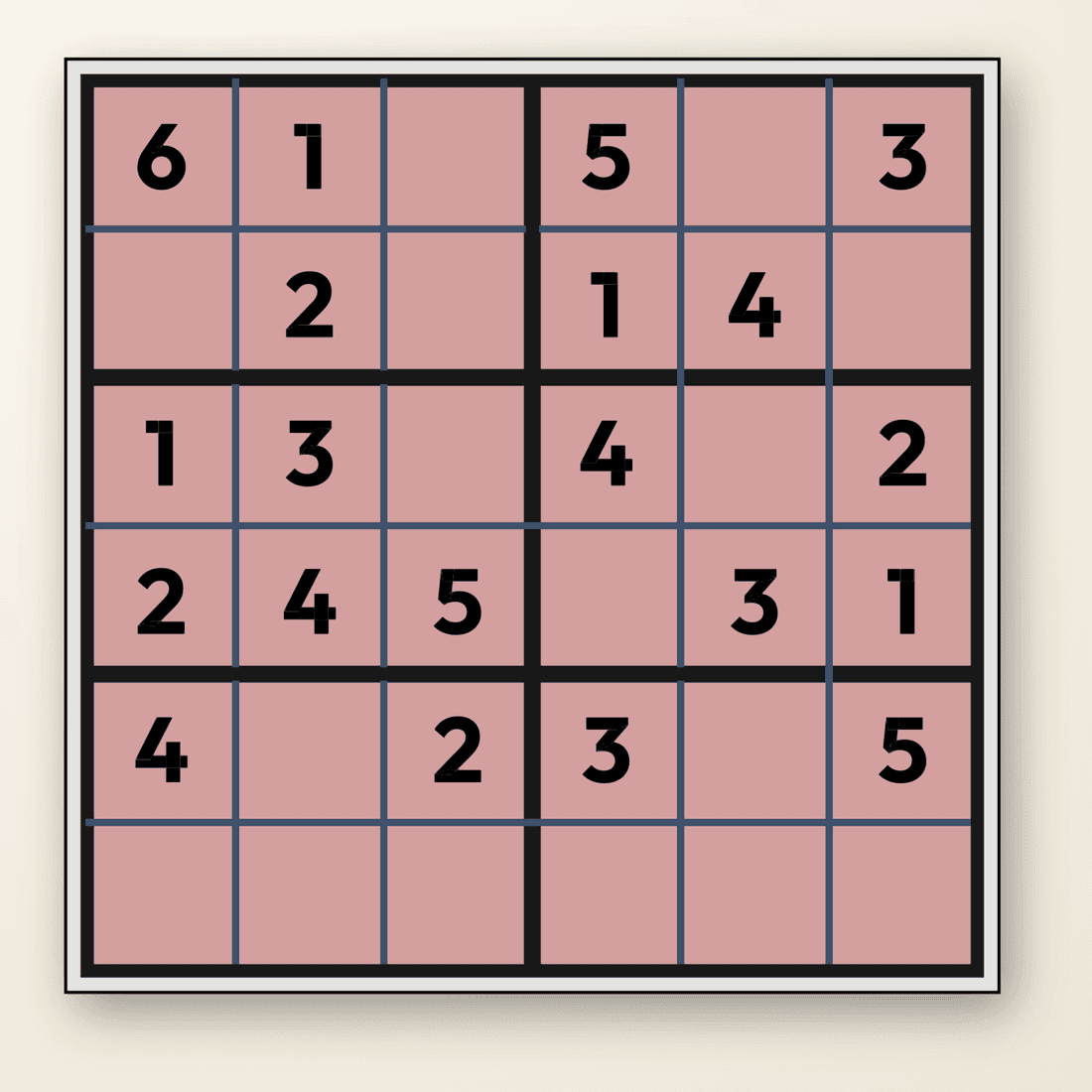
6×6
36 cells · 2×3 boxes
Rectangular boxes sneak in. The gentle middle step between the toy and the classic.
The classic
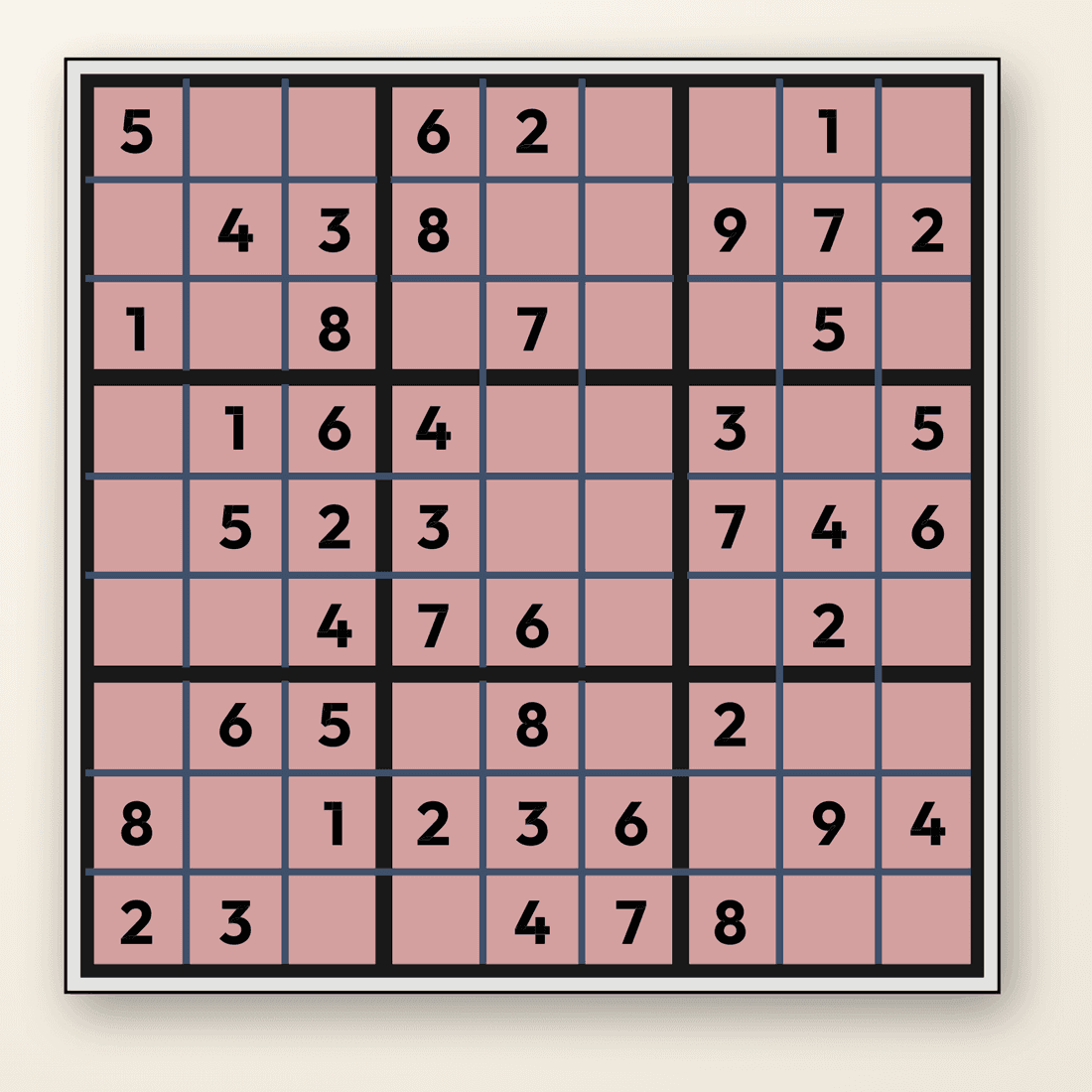
9×9
81 cells · 3×3 boxes
The one the world knows. Printed properly, graded honestly, linked to its digital twin.
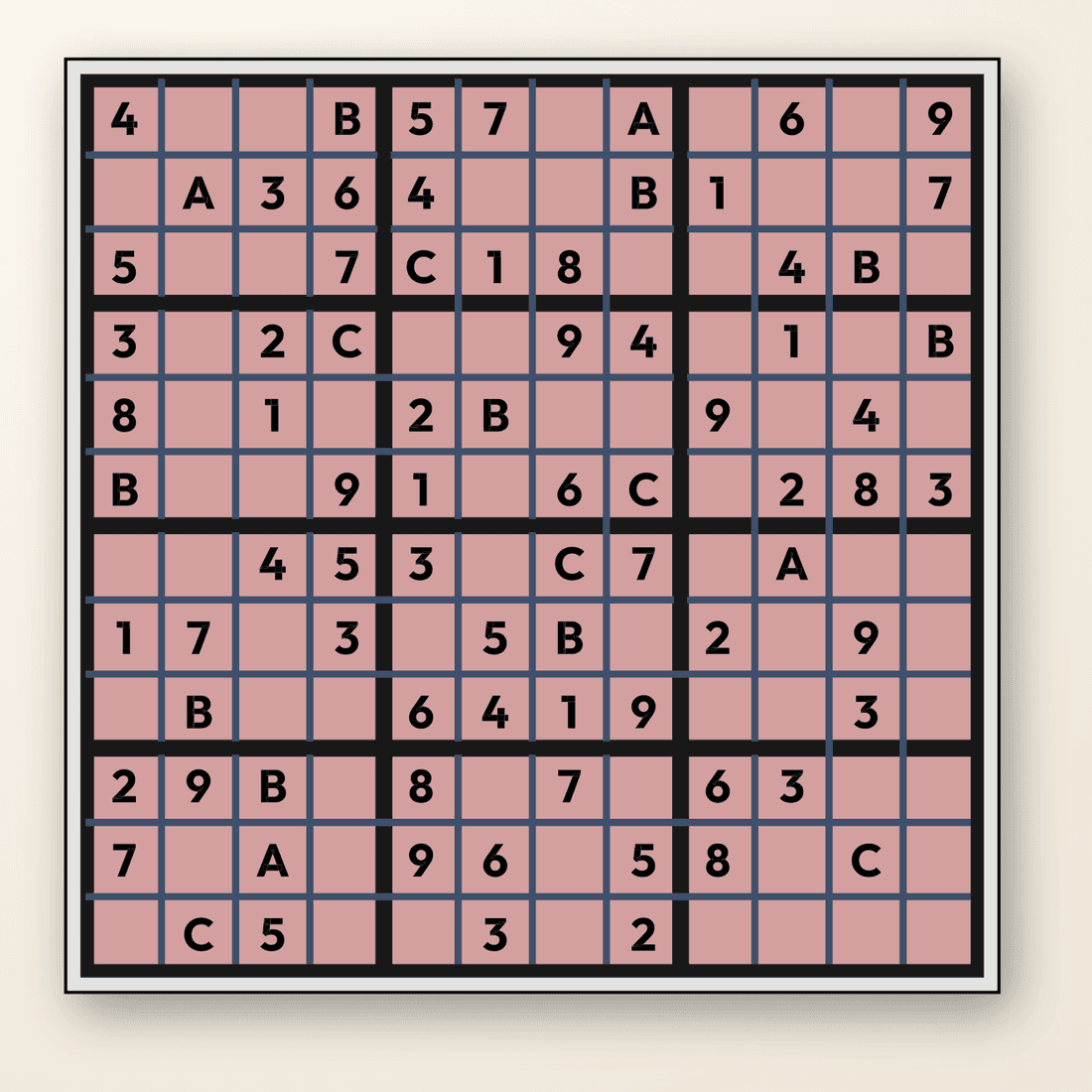
12×12
144 cells · 3×4 boxes
Nine digits aren’t enough — A, B and C report for duty. A long lunch of a puzzle.
Expert
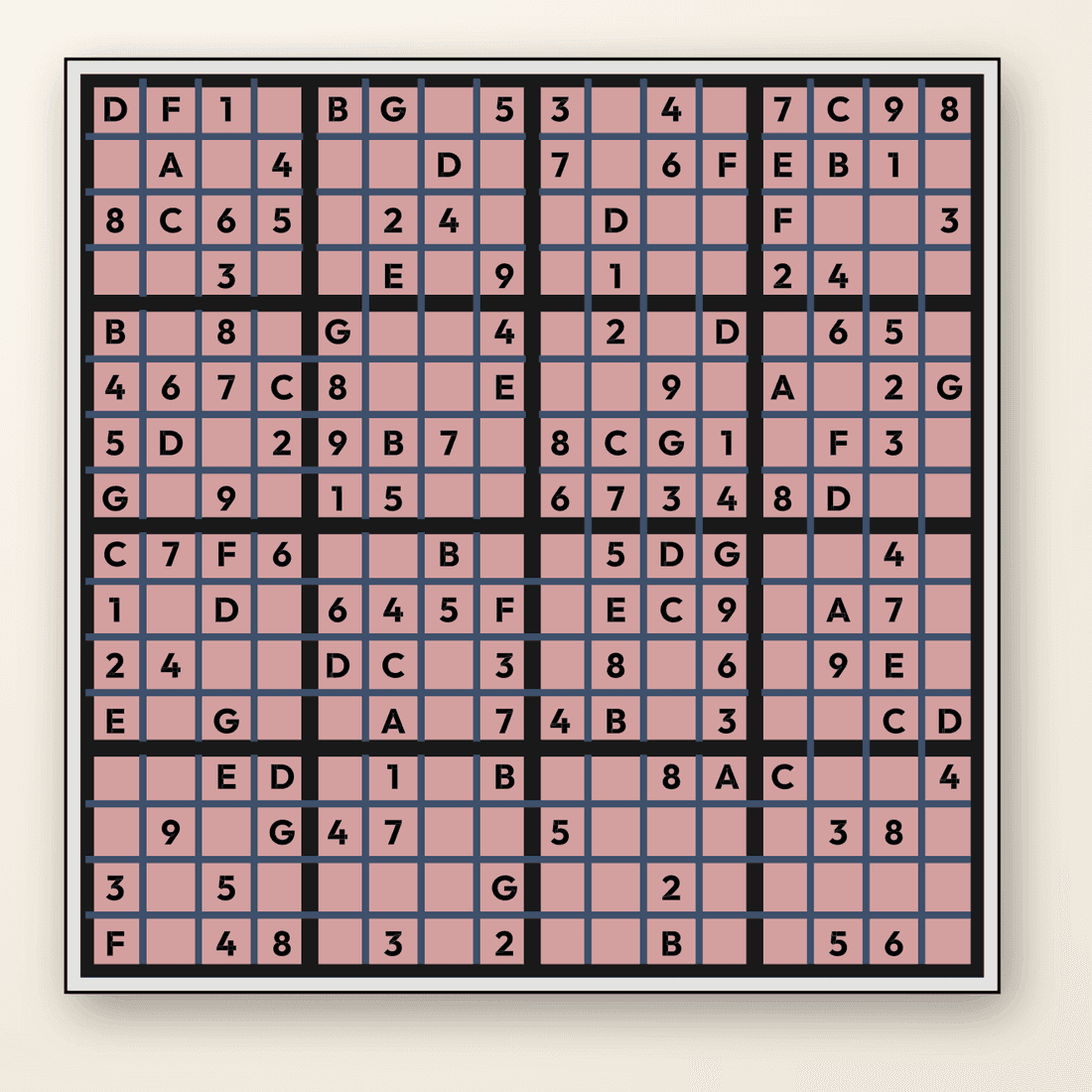
16×16
256 cells · 4×4 boxes
The full stretch, A through G. Clear an evening and sharpen two pencils.
Play it right here
Go on — play it.
This is a real 9×9 — the grid everyone means when they say Sudoku, nine rows, nine columns, nine boxes. Tap a cell, place a number, and see how our engine grades and hints on the board you already know.
This is the real engine — the same Rust solver that powers the daily puzzles, the hints, and the leaderboards. No install, nothing to set up: tap a cell and start placing numbers.
Waking the engine…
Paper first, pixels later
Start in your hands. Finish anywhere.
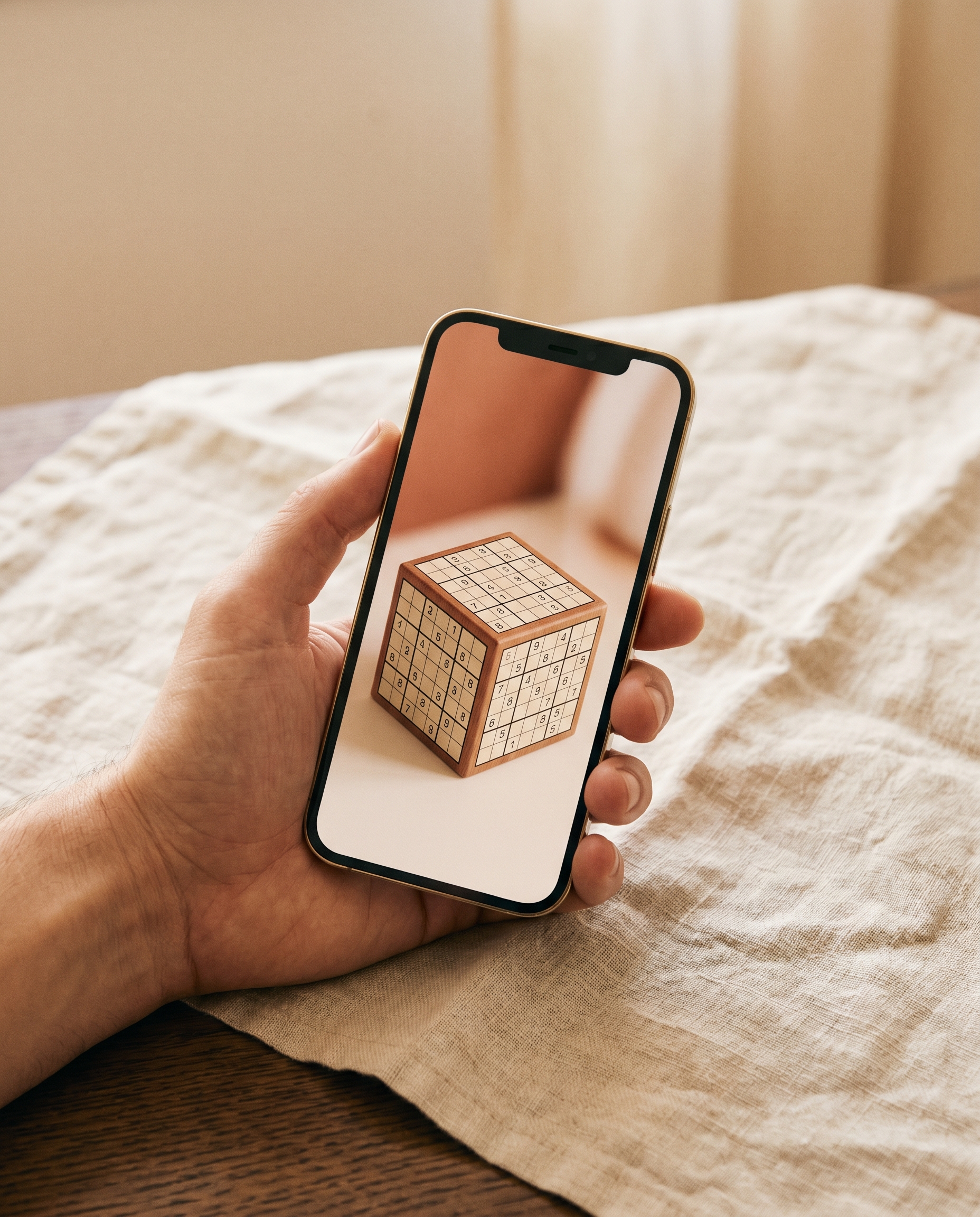
Traditional grids print as singles on heavy card stock and fill our puzzle books — and every one carries its own QR code linking to the same board in the game.
A kid can start at the kitchen table and finish on the drive home: scan the code and the puzzle continues digitally, with progress, hints, and its own leaderboard.

Try the trick now
Scan with your phone and this page's demo opens in your hand — exactly what the code on a printed puzzle does.
For the competitive
Every puzzle has a stopwatch waiting.
Speed Mode
The game walks you to the next solvable cell and you race to fill it. Wrong guesses cost five seconds. Beat par, build a streak, hear the chime climb.
Ranked runs
Runs are clocked on the server, not your browser. Daily boards for every rung, a board for every printed puzzle, and personal bests that actually mean something.
The Climb
Six rungs from a 4×4 cube to the 864-cell 12×12. Earn each one by solving it against the clock — your progress is yours for good.
The family
Two more ways in.
The ZudoFlat
The cube, pressed flat
Three faces joined at one corner, laid out as a single plate. The first taste of shared edges, with everything visible at once.
ExploreThe ZudoCube
The full six faces
The flagship object: six Sudoku grids folded into a cube you can turn in your hands or spin in the browser. Every edge shared, no safe corners.
ExploreDo you Zudo?
Start tiny. Grow monstrous.
Create a free account for daily boards, Speed Mode, and leaderboards — or order printed singles and books and let paper do the teaching.