The puzzles
One idea, three shapes.
Every Zudo puzzle is the same promise — fill the grid so each row, column and box uses every symbol once. What changes is how many grids you are holding at the same time, and how much they overlap.
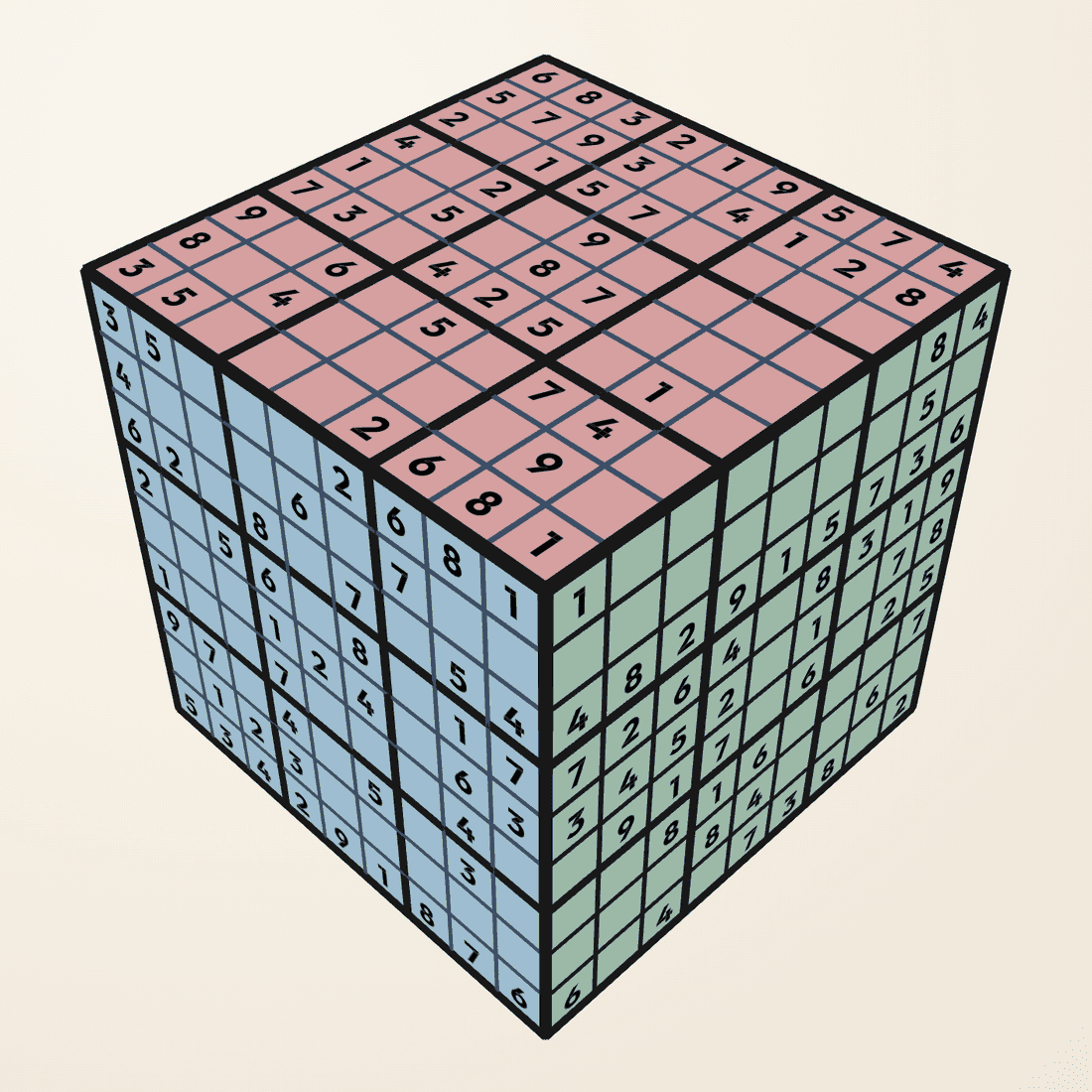
The ZudoCube
Cube
- Faces
- Six faces
- Overlap
- 54 shared edge cells
- Sizes
- 4×4 · 6×6 · 9×9 · 12×12
- Scale
- 486 cells at 9×9
The flagship. Six full Sudoku grids folded into one object, so every number you place echoes onto two other faces at once. Turn it in your hands or spin it in the browser.
Explore the cube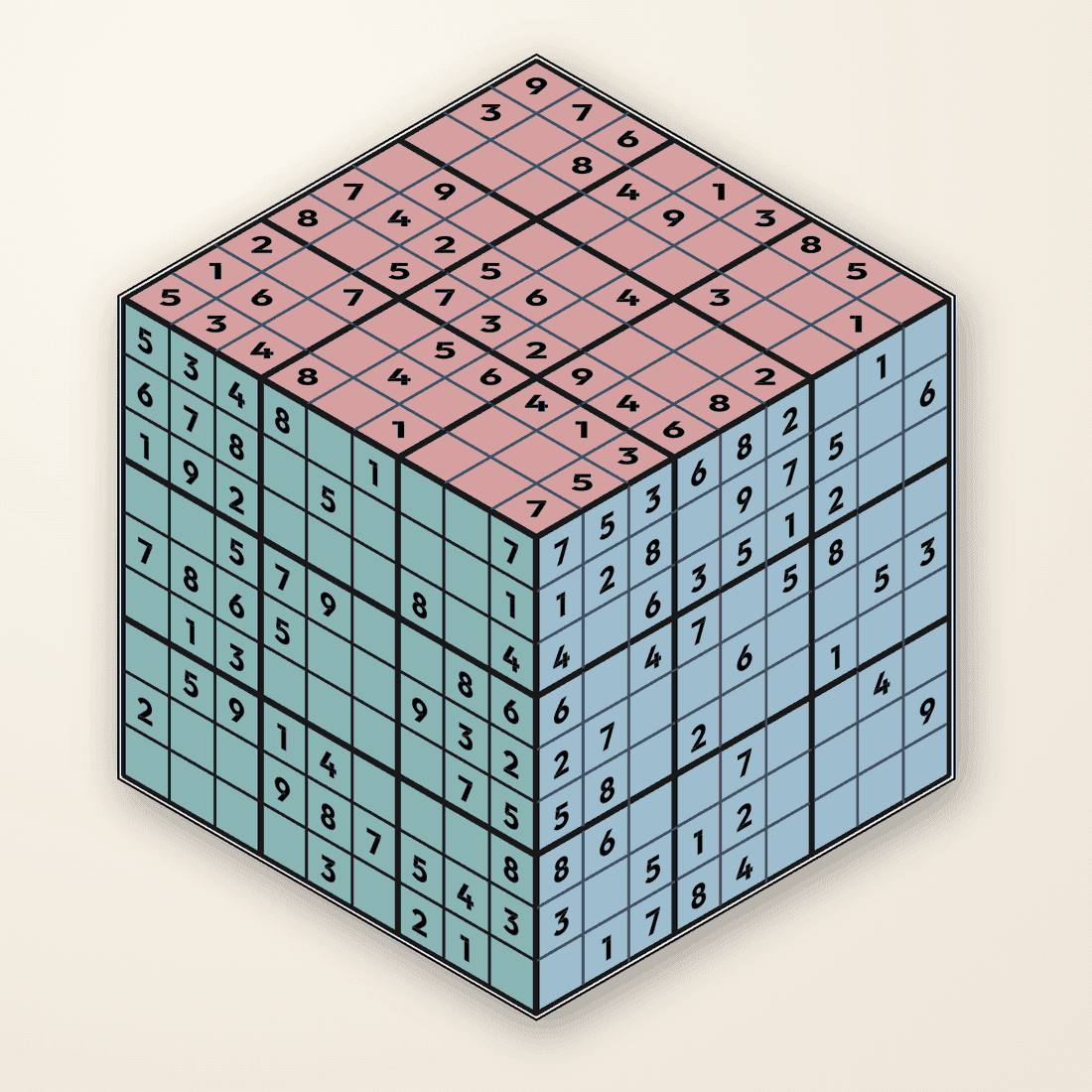
The ZudoFlat
Flat
- Faces
- Three faces
- Overlap
- Two shared edges, all visible
- Sizes
- 4×4 · 6×6 · 9×9 · 12×12
- Scale
- 243 cells at 9×9
The cube pressed flat: three faces joined at a single corner. All of the cross-face logic, none of the turning — everything you need is in one look, which makes it the honest halfway house.
Explore the flat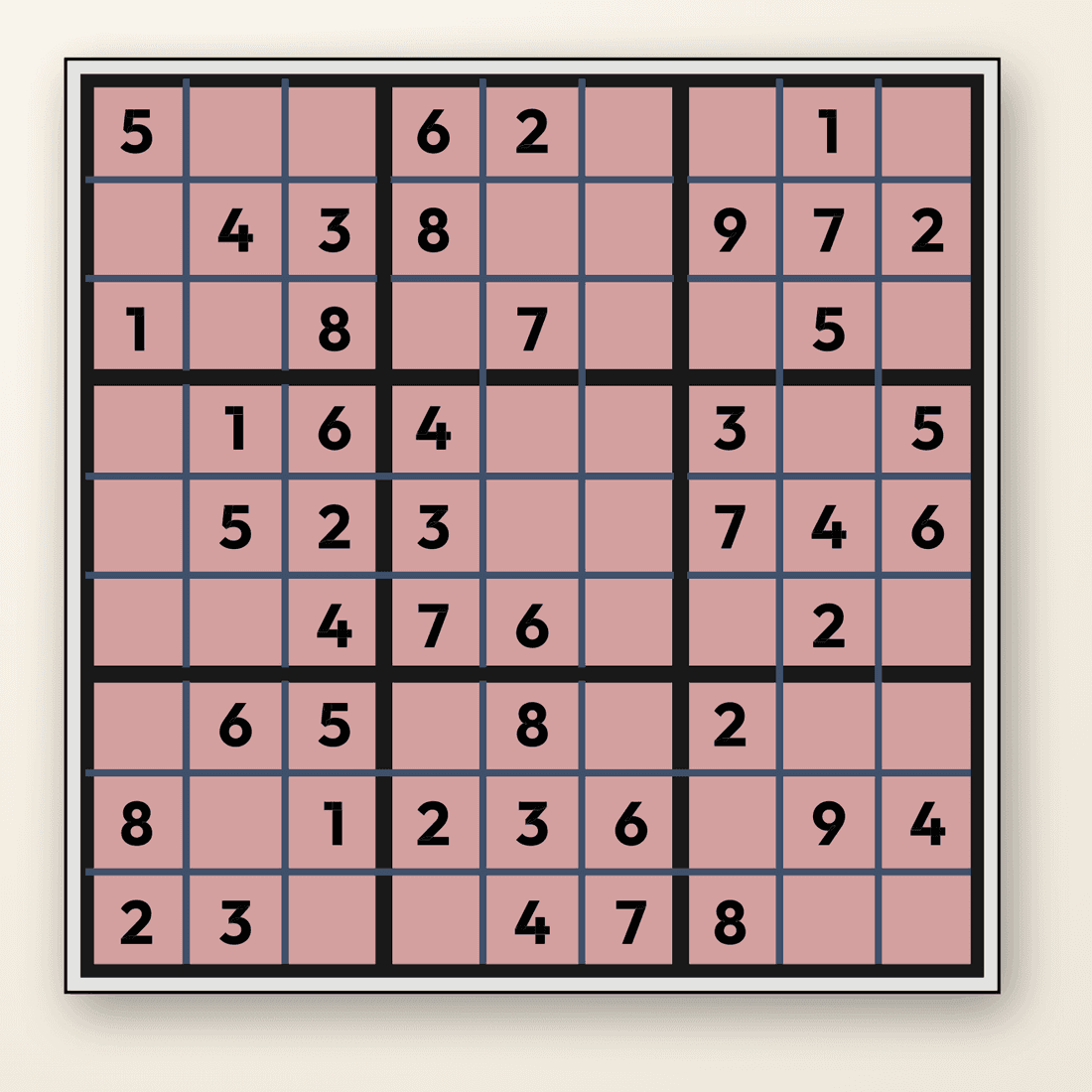
The ZudoTrad
Trad
- Faces
- One face
- Overlap
- No shared edges
- Sizes
- 4×4 · 6×6 · 9×9 · 12×12 · 16×16
- Scale
- 81 cells at 9×9
The grid you already know, built by the same engine: a guaranteed unique solution, honest grading, and hints that teach rather than tell. Sized from a first 4×4 to a 16×16 that runs out of digits.
Explore the trad16×16 is traditional only — no cube that large exists yet.
Not sure where to start
Start flat. Fold it later.
Never played Sudoku
Begin on a traditional 4×4 or 6×6 — the rules, no shared edges, no turning. A five-year-old can finish one alone.
Sudoku is old news
Go straight to a flat. It is the first time a number you place lands in two puzzles at once, and everything stays visible while you learn that.
You want the real thing
The 9×9 cube: 486 cells, 54 shared edge cells, no safe corners. This is the object the whole engine was written for.
Want it taught move by move? ZudoCube University walks you through interactive lessons on a real board.
Play any of them free.
A fresh puzzle drops every day, and every printed board carries a QR code that opens the same puzzle in the browser.