The ZudoFlat
The cube, pressed flat.
A ZudoFlat is three full Sudoku faces meeting at a single corner, laid out as one flat plate. The edges where they touch are shared — the same cell, the same number, on two grids at once. All the cube's cross-face logic, with every consequence visible in a single look.
How it works
Three grids that argue with each other.
A flat is organized like the corner of a cube you happen to be looking straight down: a top face and two sides, joined along their edges, flattened into a hexagonal plate.
01
Three grids, one corner
Every flat is three complete Sudoku faces — Top, Left, and Front — meeting at a single corner cell that belongs to all three at once.
02
The seams are shared
Where two faces touch they share a whole edge of cells. A number placed on the seam counts in both grids — fill one face and you have quietly constrained the other two.
03
Everything in one look
Unlike the cube, nothing hides around a corner. Every row, box, and shared seam faces you at once — the logic is 3D, the reading is not.
04
The bridge to the cube
Flats are how cross-face thinking clicks. Once seams feel natural here, the full cube is just three more faces and a little turning.
Want it taught move by move? ZudoCube University walks you through interactive lessons on a real board — this page is the grown-up tour, University is the classroom.
Pick your size
One idea, every appetite.
Flats come in every size the cube does — and because each one is three faces instead of six, they sit exactly halfway between a traditional grid and the full cube.
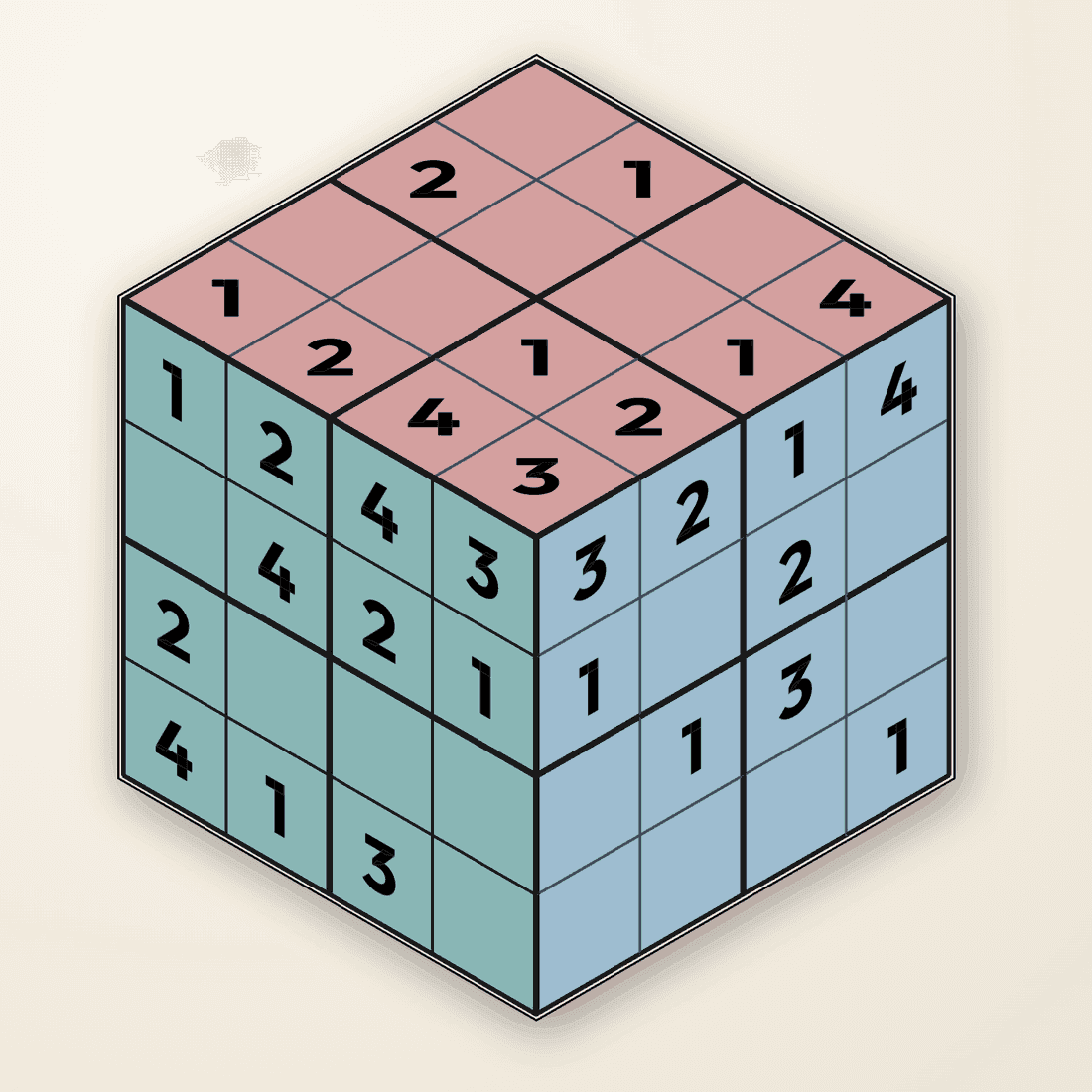
4×4
48 cells · 3 faces
The gentlest introduction to shared seams — four numbers, three little grids, one corner.
Start here
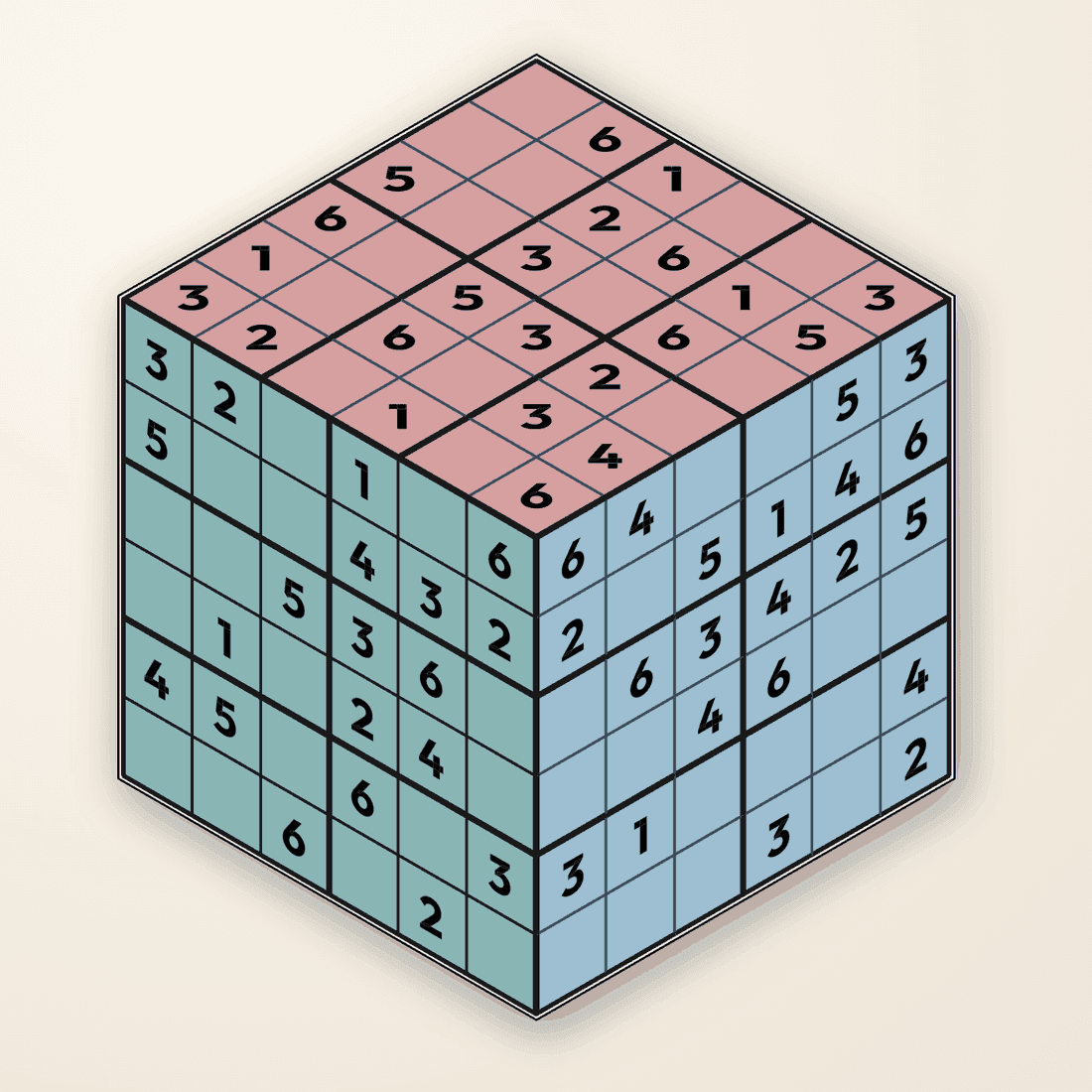
6×6
108 cells · 3 faces
Rectangular 2×3 boxes join the party. The canonical first flat, and rung two of The Climb.
Most popular
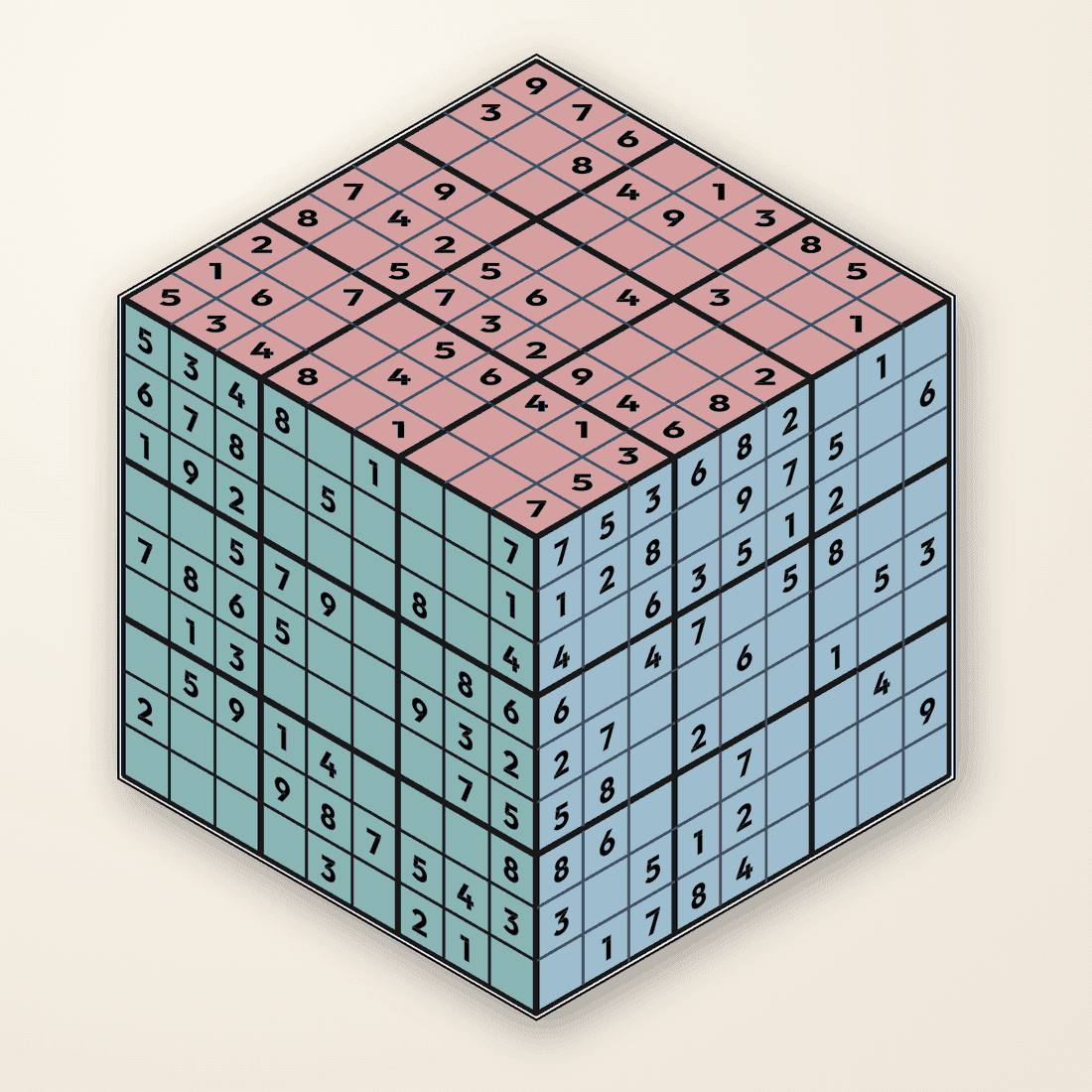
9×9
243 cells · 3 faces
Three full traditional grids joined at one corner. Serious Sudoku with a spatial twist.
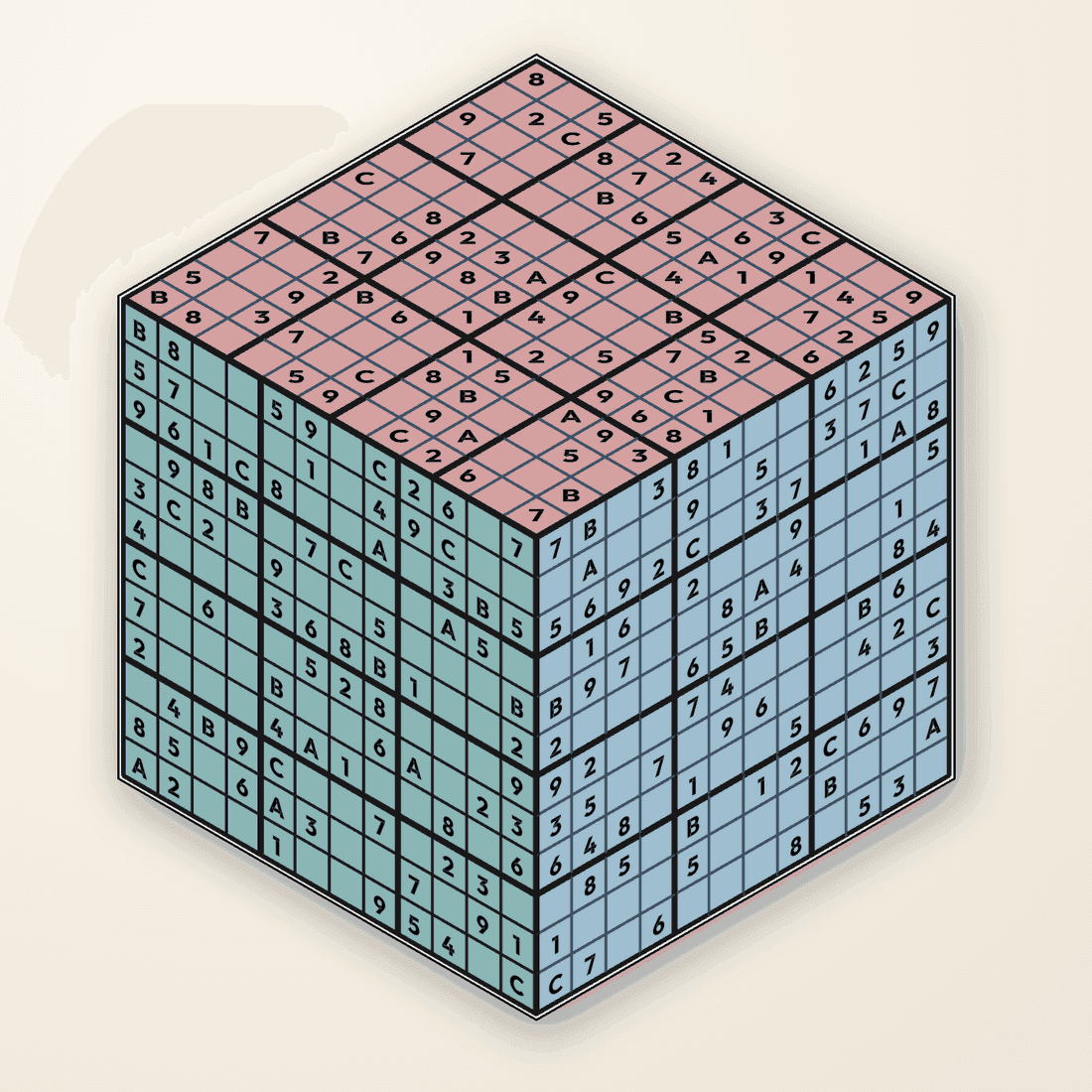
12×12
432 cells · 3 faces
Letters A–C step in past nine. A long evening on a single beautiful plate.
Play it right here
Go on — play it.
This is a real 6×6 flat. Tap a cell, place a number, and watch a value on the seam land on two grids at once.
This is the real engine — the same Rust solver that powers the daily puzzles, the hints, and the leaderboards. No install, nothing to set up: tap a cell and start placing numbers.
Waking the engine…
Paper first, pixels later
Start in your hands. Finish anywhere.
ZudoFlats print as press sheets — crop marks, register, the three-face plate in the center — and every sheet carries its own QR code linking to the exact same puzzle in the game.
Scan it and your pencil progress becomes screen progress: the flat opens digitally, joins your collection, and brings its own per-puzzle leaderboard along.

Try the trick now
Scan with your phone and this page's demo opens in your hand — exactly what the code on a printed puzzle does.
For the competitive
Every puzzle has a stopwatch waiting.
Speed Mode
The game walks you to the next solvable cell and you race to fill it. Wrong guesses cost five seconds. Beat par, build a streak, hear the chime climb.
Ranked runs
Runs are clocked on the server, not your browser. Daily boards for every rung, a board for every printed puzzle, and personal bests that actually mean something.
The Climb
Six rungs from a 4×4 cube to the 864-cell 12×12. Earn each one by solving it against the clock — your progress is yours for good.
The family
Two more ways in.
The ZudoCube
The full six faces
The flagship object: six Sudoku grids folded into a cube you can turn in your hands or spin in the browser. Every edge shared, no safe corners.
ExploreThe ZudoTrad
The grid you know
Single-face Sudoku from a 4×4 for young kids to a 16×16 with letters. The gentlest way in, printed properly and linked to its digital twin.
ExploreDo you Zudo?
Flat package. Deep puzzle.
Create a free account to play flats daily, race Speed Mode, and climb the ladder — or order printed flats and keep a pencil involved.