The ZudoCube
Sudoku grew a third dimension.
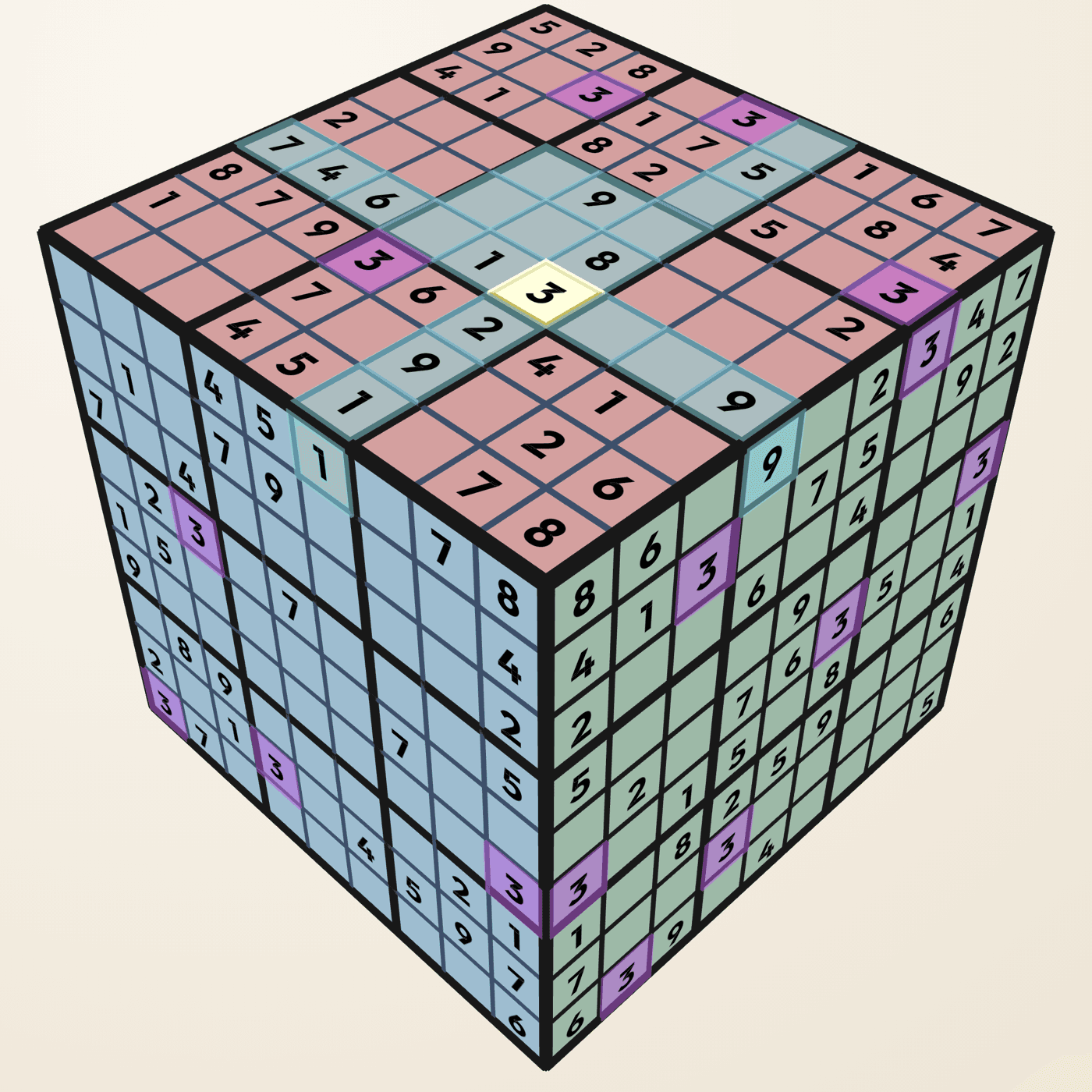
A ZudoCube is six complete Sudoku grids folded into one object. Every edge cell lives on two faces, every corner cell on three — so each number you place echoes around the cube. One puzzle, one solution, no safe corners.
How it works
You know 90% of the rules already.
If you can solve a Sudoku on paper, you can play a ZudoCube. The remaining ten percent — the shared cells — is where the whole game lives.
01
Every face is a real Sudoku
Each of the six faces is a complete grid: every row, column, and box uses each number exactly once. Nothing about the classic rules changes.
02
Edges belong to two faces
A cell along an edge sits on two faces at once. Place a number there and both faces have to live with it — one move, two grids.
03
Corners belong to three
The corner cells appear on three faces simultaneously. One value has to satisfy three rows, three columns, and three boxes.
04
Deductions ripple around
Narrowing a row on the front face eliminates candidates on the top and right. Turn the cube, follow the consequences, and the far side starts solving itself.
Want it taught move by move? ZudoCube University walks you through interactive lessons on a real board — this page is the grown-up tour, University is the classroom.
Pick your size
One idea, every appetite.
The cube scales from a first logic toy to a full afternoon of consequence-chasing. Same idea at every size — only the appetite changes.
Start here
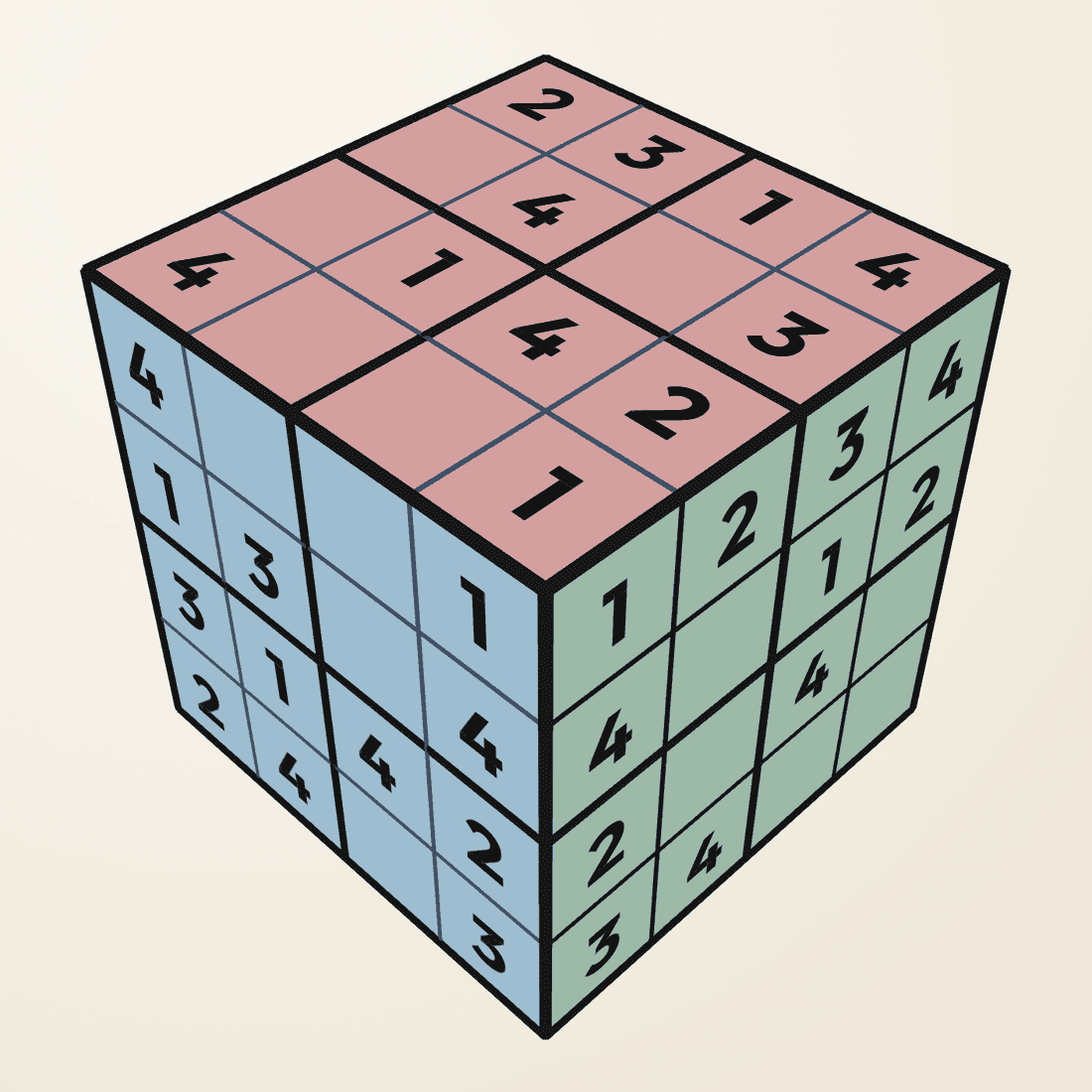
4×4
96 cells · 6 faces
The first cube. Four numbers and six faces — kids meet the shared edge without heavy arithmetic.
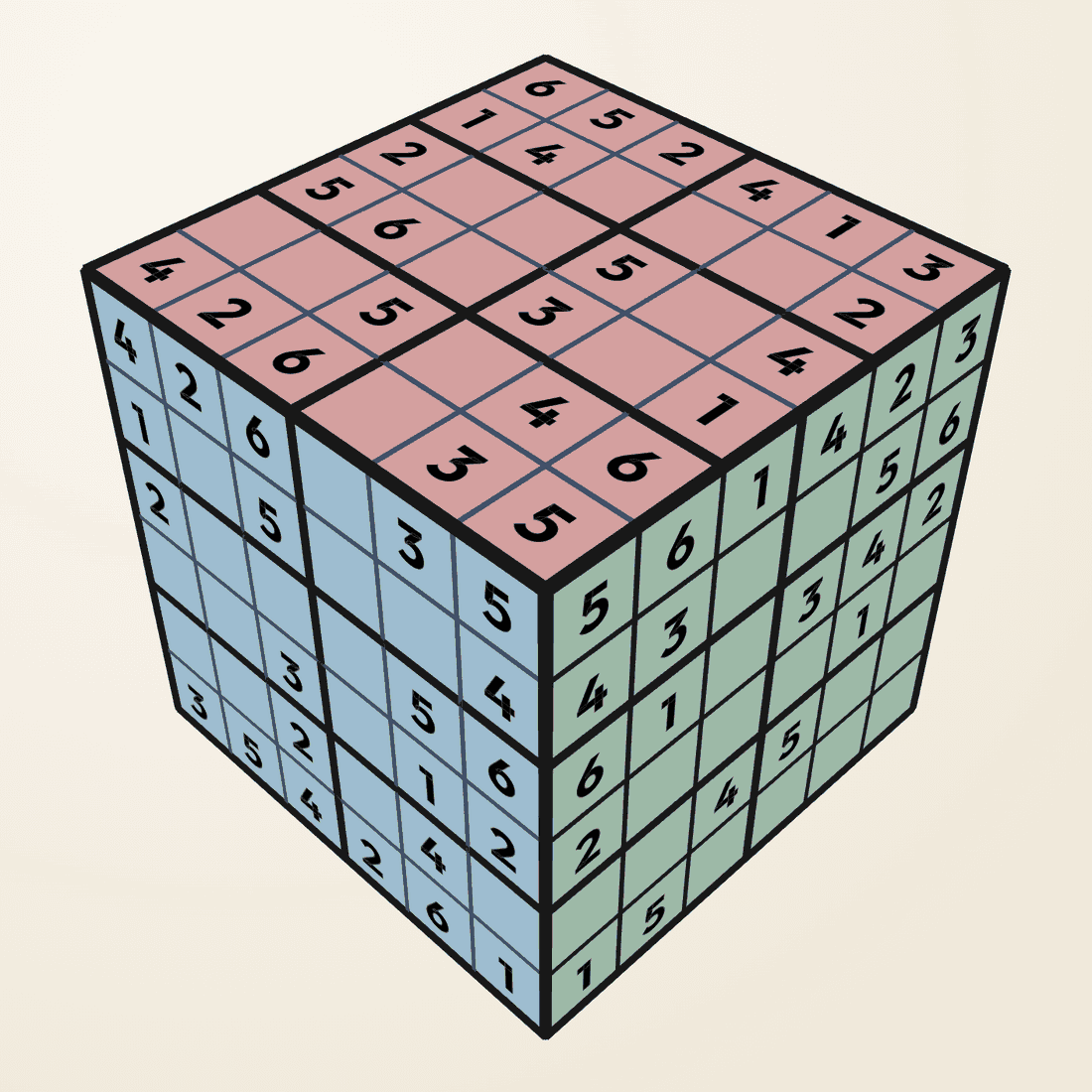
6×6
216 cells · 6 faces
Rectangular 2×3 boxes and a real bite. The classic warm-up size for the daily puzzle.
Flagship
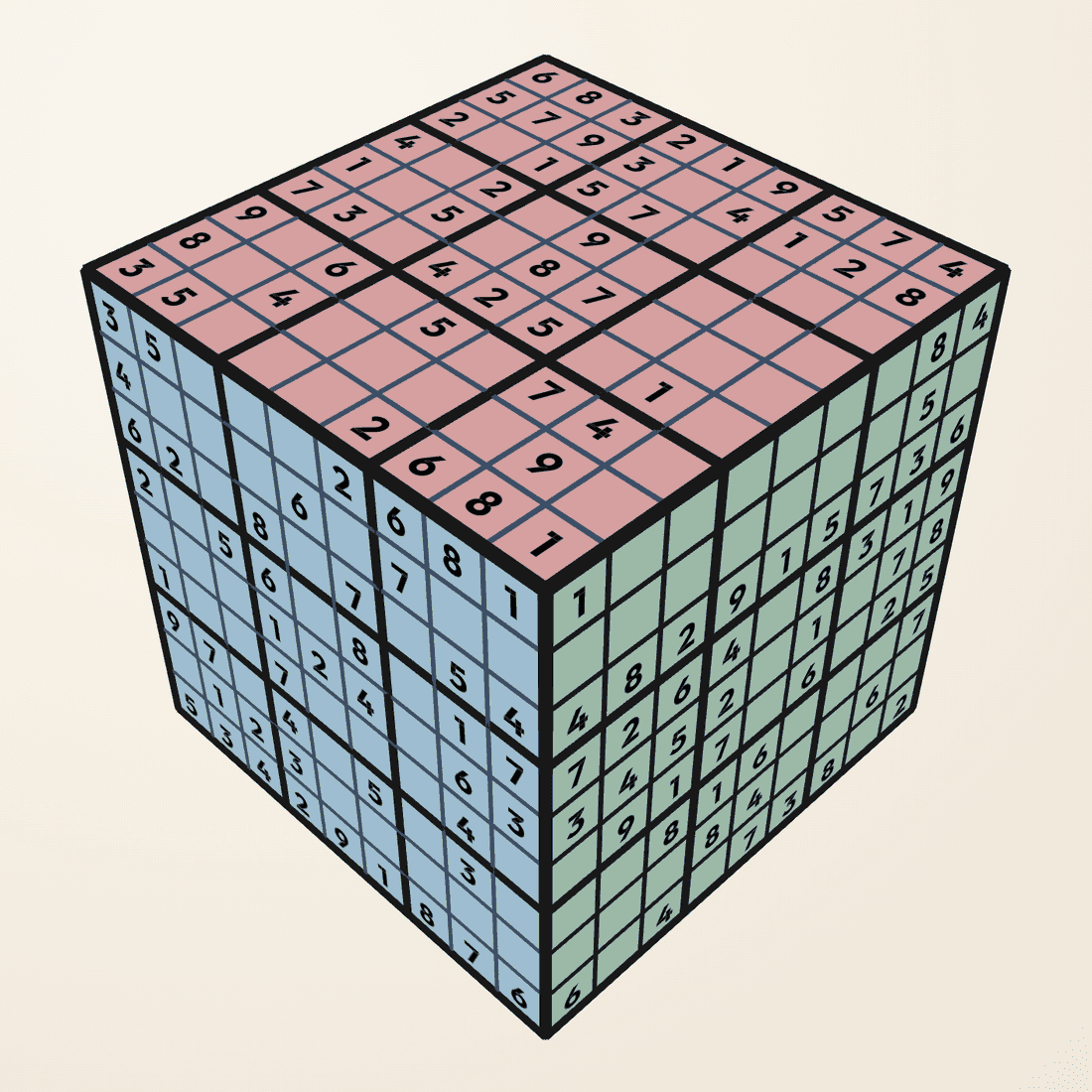
9×9
486 cells · 6 faces
The flagship. The full classic grid, six times over, with every edge shared between faces.
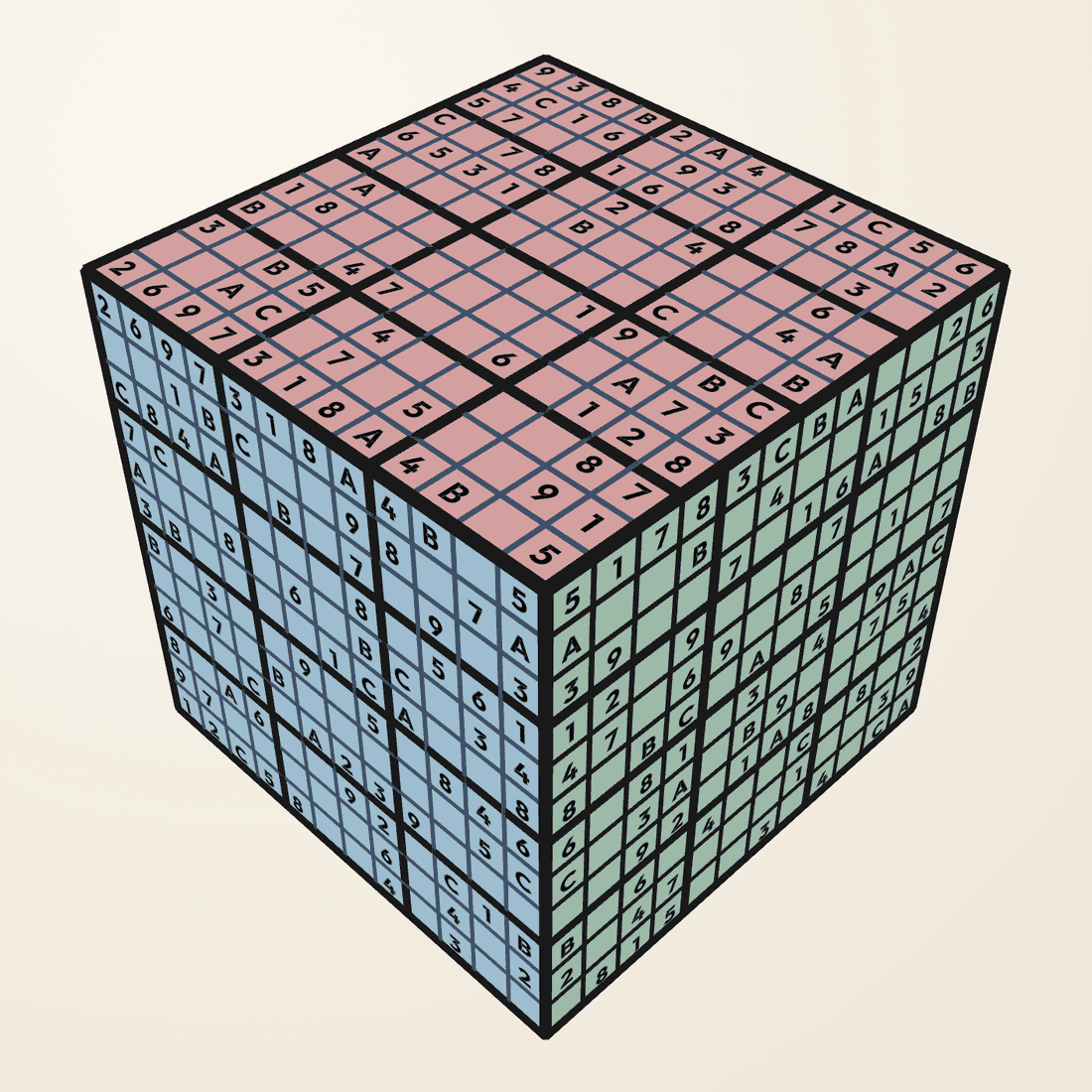
12×12
864 cells · 6 faces
Nine digits run out, so the letters A–C join the grid. An afternoon, not a coffee break.
Also printed in 8×8 editions for the rectangular-box devoted.
Play it right here
Go on — play it.
This is a real 6×6 cube. Drag to turn it, tap a cell, place a number — and watch the shared edges do their thing.
This is the real engine — the same Rust solver that powers the daily puzzles, the hints, and the leaderboards. No install, nothing to set up: tap a cell and start placing numbers.
Waking the engine…
Paper first, pixels later
Start in your hands. Finish anywhere.
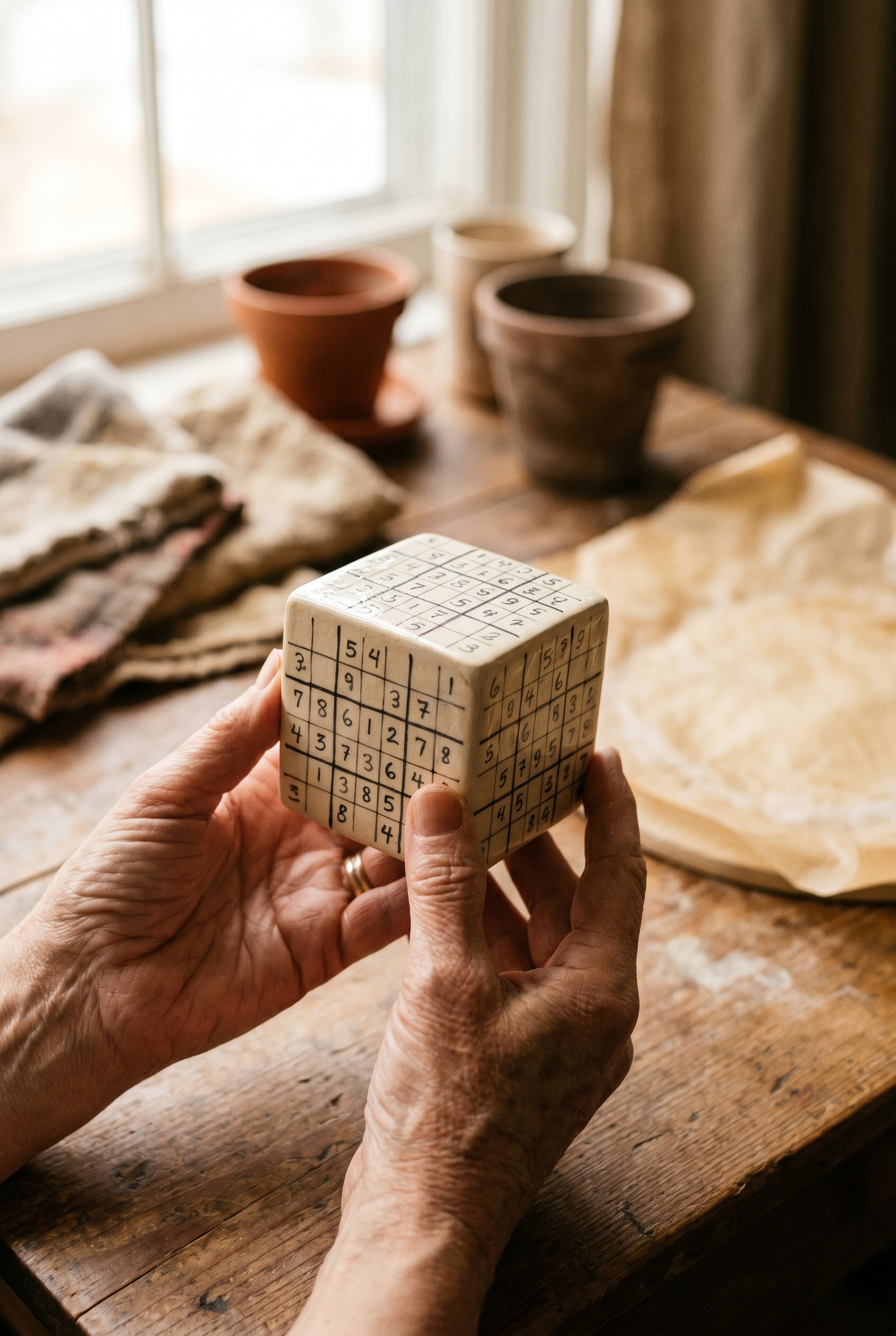
Every printed ZudoCube carries its own code and QR on the colophon flap — scan it and the exact same cube opens in the game, ready to continue where your pencil stopped.
The code (zudo.us/ABCD-1234) is the cube’s identity: it adds the cube to your collection, syncs your progress, and opens its own leaderboard — every printed cube has one, waiting for a rival.

Try the trick now
Scan with your phone and this page's demo opens in your hand — exactly what the code on a printed puzzle does.
For the competitive
Every puzzle has a stopwatch waiting.
Speed Mode
The game walks you to the next solvable cell and you race to fill it. Wrong guesses cost five seconds. Beat par, build a streak, hear the chime climb.
Ranked runs
Runs are clocked on the server, not your browser. Daily boards for every rung, a board for every printed puzzle, and personal bests that actually mean something.
The Climb
Six rungs from a 4×4 cube to the 864-cell 12×12. Earn each one by solving it against the clock — your progress is yours for good.
The family
Two more ways in.
The ZudoFlat
The cube, pressed flat
Three faces joined at one corner, laid out as a single plate. All the shared-edge logic, no turning — the thinking is 3D, the paper is not.
ExploreThe ZudoTrad
The grid you know
Single-face Sudoku from a 4×4 for young kids to a 16×16 with letters. The gentlest way in, printed properly and linked to its digital twin.
ExploreDo you Zudo?
Six faces are waiting.
Create a free account to play daily cubes, race Speed Mode, and climb the leaderboards — or order a printed cube and start with your hands.